
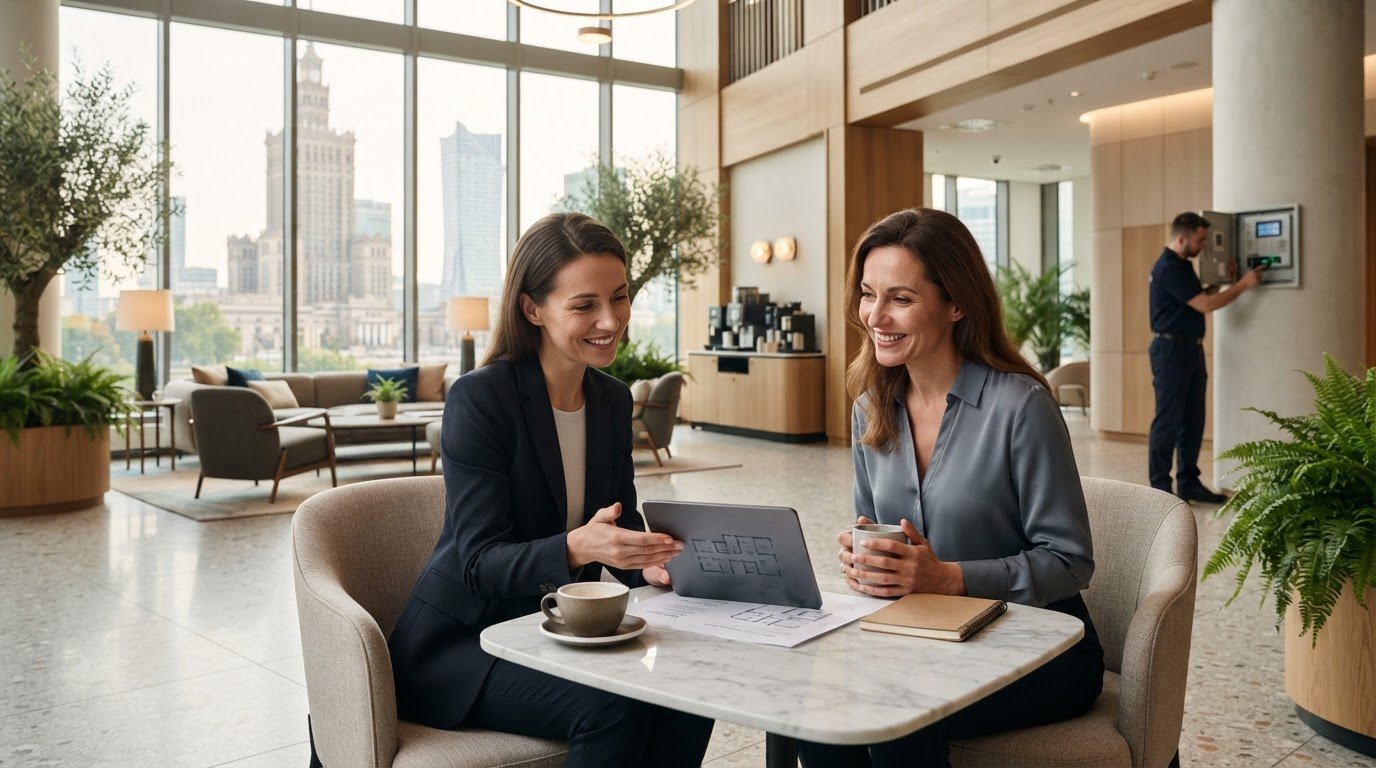
Tenant turnover often starts with an unresolved problem, not a move-out notice. For commercial landlords in Poland, strategies to decrease tenant turnover include responsive communication, timely maintenance coordination, clear renewal conversations, careful applicant screening, and amenities that meet tenants’ needs. Managed consistently, these basics help surface concerns early and give tenants practical reasons to stay.
It’s understandable to focus on finding a replacement once a tenant decides to leave. But reducing avoidable departures starts earlier. Tenants may reconsider when requests go unanswered, renewal terms arrive too late, or the property no longer supports the way they work.
This guide covers practical ways to strengthen tenant relationships and improve retention across a commercial property portfolio. You’ll learn how to organize reliable communication, make renewals clearer, assess whether a prospective tenant is a good fit, structure property management, and choose amenities that add everyday value. The aim is a proactive process that reduces recurring issues and gives you a clearer view of what tenants need to stay.
Key Takeaways
- Set clear communication channels and follow up on tenant concerns so small issues don’t become reasons to leave.
- Start renewal conversations early, explain proposed terms clearly, and consider flexibility that reflects tenants’ needs.
- Use consistent property management processes to track requests, feedback, and recurring issues across your portfolio.
- Screen applicants for a suitable tenancy and prioritize amenities that support tenants’ day-to-day use of the property.
- Review retention patterns over time to identify which changes are most likely to strengthen tenant satisfaction.
1. Tenant-landlord communication and maintenance response
Effective strategies to decrease tenant turnover start with dependable communication and visible follow-through. Tenants need a clear way to report problems, understand what happens next, and receive updates while repairs are underway. Set out preferred contact channels, such as email, phone, or a tenant portal, and explain what information helps diagnose an issue. For example, ask tenants to include the affected area, a brief description, and photographs when useful.
Acknowledge each request, assign responsibility, and track it through to resolution. A shared maintenance log can record the date received, property or unit, issue category, priority, actions taken, and completion date. This gives managers a reliable view of open repairs and helps reveal recurring faults, such as heating problems or a leaking entrance door. Once the work is done, update the tenant and ask whether it resolved the problem.
How much does tenant turnover cost landlords in Poland? There is no single cost for every departure. The total depends on vacancy duration, cleaning, repairs, advertising, screening, and the work required to prepare the space. Track these costs separately to see which expenses recur and whether maintenance decisions could help prevent them.
How often should landlords communicate with tenants and conduct property inspections? Keep communication open throughout the tenancy, check in regularly, and respond promptly to concerns. Conduct property inspections quarterly, making their purpose and timing clear to tenants. A brief follow-up can identify small issues before they become larger repair requests.
Use routine inspections to inform a maintenance plan, not just to record visible damage. Review shared areas, lighting, access points, fixtures, and reported issues, then prioritize work by urgency and tenant impact. Clean, well-lit common areas and functioning shared facilities shape the everyday experience. If tenants repeatedly report the same inconvenience, consider whether replacing a fixture or upgrading the property would address the cause.
Seasonal upkeep makes the maintenance plan more specific. Schedule gutter cleaning in autumn, snow removal in winter, and garden upkeep in spring and summer. These tasks help managers prepare for predictable needs rather than wait for a complaint. Include common areas and building systems in the schedule, and record completed work in the maintenance log.
Use tenant feedback to guide upgrades and incentives. If several tenants mention poor lighting in a shared corridor, assess the area and prioritize an improvement. If they report an outdated appliance or worn fixture, consider its condition, repair history, and practical value before replacing it. Updating tenants about planned work shows that their feedback informs decisions. Repeated unresolved issues, by contrast, can erode confidence.
These strategies are most effective when communication, inspections, and maintenance records inform one another. Review open requests regularly, flag recurring problems, and share progress with affected tenants. This creates a practical feedback loop: reports help set priorities, tenants can confirm whether repairs worked, and recurring concerns can guide future upgrades.
2. Lease renewal incentives
A renewal offer should give tenants a clear reason to stay, not simply delay a decision. Review the current agreement, payment history, tenant feedback, and any unresolved concerns. Then consider a relevant incentive, such as a rent concession, practical upgrade, parking discount, or more flexible lease terms. For a commercial tenant, replacing worn lighting may matter more than offering a generic gift.
How can landlords compare tenant incentives with vacancy and re-letting costs? Compare the value of a concession or upgrade with likely lost rent during vacancy, advertising, screening, cleaning, repairs, and lease administration. Use records from previous turnovers to identify recurring costs, then weigh them against the proposed renewal terms.
Set out renewal terms clearly and give tenants time to consider them. A written proposal should state the rent, payment due dates, tenancy length, responsibilities, and any incentive conditions. If a discount applies only for a defined period, specify its duration and the rent afterwards. Clear wording reduces misunderstandings and gives both parties a concrete basis for deciding.
What tenant rights and lease renewal rules apply in Poland? Start with the signed agreement, which should set out rent, payment due dates, tenancy length, and each party’s responsibilities. Renewal arrangements depend on the tenancy type and contract terms, so distinguish commercial premises from residential tenancies before proposing changes.
Flexible payment arrangements can support tenant satisfaction without changing the total rent. Consider whether a different payment date or a clear choice among available payment methods would help. Record any revised schedule in the agreement, stating the amount due and timing plainly. This makes the arrangement easier to administer and reduces avoidable payment disputes.
Longer leases can provide continuity, while flexible terms may suit tenants with uncertain business plans. Match the term to the tenant’s operational outlook, space requirements, and confidence in the location. A renewal might pair a longer commitment with an upgrade, such as improved lighting or a refreshed shared area. An incentive is more persuasive when it addresses a real business need.
What are the risks of rent discounts, lease incentives, and longer fixed-term contracts in Poland? Discounts can reduce rental income, unclear conditions can lead to disputes, and a fixed term can limit flexibility if the tenant’s needs change. Document the incentive, its duration, the revised rent, and the consequences of early departure in the agreement.
Review rent against local market conditions and the property’s value before presenting an increase. Explain the basis for proposed changes and show how an upgrade or flexible term supports the offer. For commercial portfolios, structured commercial property management workflows can help organize renewal dates, tenant records, and follow-up tasks.
3. Professional property management and communication
Professional property management makes tenant retention a repeatable process rather than a last-minute response to a move-out notice. Assign responsibility for lease administration, tenant communication, rent collection, and property records. For example, a portfolio manager can review open tenant issues alongside upcoming lease dates, then coordinate follow-up before a concern becomes a reason to leave.
Use a consistent communication plan for each property. Send a personalized renewal reminder before the lease ends, allowing enough time for a considered decision without contacting tenants so early or often that it becomes irritating. When proposing a rent increase, explain the change and provide advance notice. Transparent reasoning supports the relationship, even when tenants need time to assess the new terms.
Professional management also means describing a rental accurately. Set out the premises, shared facilities, access arrangements, and known limitations in marketing materials. A business considering an office, for example, needs a clear picture of usable space and building amenities. Accurate advertising helps prospective tenants assess fit before signing and reduces mismatched expectations that can contribute to early turnover.
Track the annual turnover rate to assess whether management changes are working. Divide the number of units turned over during the year by the total number of units, then multiply by 100 to express the result as a percentage. Compare results across periods and properties. If one building shows more departures, review its tenant feedback, lease records, and recurring operational concerns.
Rent collection works best with clear payment terms and a consistent process. State payment dates and accepted methods in the agreement, send reminders on a standard schedule, and record payments received. A professional manager can also answer questions about balances promptly. This reduces misunderstandings and gives tenants a predictable contact for routine account matters.
Property management technology can bring lease dates, tenant records, communications, and operational tasks into one workflow. AI-driven tools can streamline interactions, while shared records give managers context before replying. For example, a manager can review earlier correspondence before answering a tenant’s question, rather than asking them to explain the issue again.
Build tenant community through practical channels such as a property newsletter, an online tenant forum, or an event for occupants. Use each channel for a clear purpose, such as sharing building updates or collecting feedback. A proactive manager can review recurring comments and identify improvements. That feedback loop makes tenant experience visible and gives management a basis for action.

4. Screening applicants for a suitable tenancy
Applicant screening can support retention by checking whether the premises, lease terms, and prospective tenant’s plans align. For a commercial unit, compare the intended use with the property’s layout, access, and operating conditions. A mismatch, such as a business needing facilities the premises cannot support, can lead to dissatisfaction soon after signing.
Use the same documented screening process for every applicant. Review the application, confirm business and contact details, and assess the proposed tenancy against clear criteria. Record details such as intended use, expected occupancy, preferred lease duration, and operational requirements. Consistent records make comparisons more objective and help explain why an applicant is suitable.
Rental history can show how an applicant handled previous agreements. With the applicant’s consent, contact a former landlord or property manager and ask specific questions: Were payments made as agreed? Were concerns communicated clearly? Was the space returned in suitable condition? Compare the answers with the application and clarify any inconsistencies before deciding.
Assess financial capacity against the proposed rent and payment schedule. Depending on the applicant, relevant documents may include business accounts, income records, or other evidence of ability to pay. Consider these alongside the lease’s payment terms, not in isolation. A tenant whose expected cash flow conflicts with the schedule may be a poor fit, even if the premises meet their needs.
References add useful context to an application. Ask professional or landlord references about reliability, communication, and how the applicant handled difficulties. A reference describing a resolved payment issue, for instance, is more informative than a general endorsement. Record what each reference confirms, then assess it alongside the applicant’s plans and rental history.
Screening should also check whether expectations align on both sides. Explain the space’s practical features, shared areas, access arrangements, and agreement terms. Invite applicants to describe their priorities and ask questions. If a tenant needs frequent deliveries but the building has limited loading access, discuss that constraint before signing, not after operations begin.
After move-in, use feedback to confirm that the original fit remains sound. A brief conversation about access, shared facilities, or communication can surface an issue early. Thank tenants for specific input and record any action taken. Following through can improve satisfaction and retention by showing that feedback informs property decisions.
To reduce tenant turnover, treat screening as the start of a relationship, not simply a selection gate. Compare application details with later tenancy outcomes, such as repeated payment queries or unmet space requirements. If the same mismatch appears across applicants, refine the property description or screening questions. Better alignment supports a more positive tenancy from the outset.
5. Rental amenities that encourage tenants to stay
A useful amenity solves a recurring tenant need instead of simply adding features. For a commercial property, assess access to public transit, major roads, supermarkets, schools, and healthcare facilities. Compare these advantages with tenants’ daily routines. A workplace near transit, for example, may benefit more from dependable bicycle storage or clear visitor access than from an underused recreational space.
Before investing in amenities, review tenant feedback and maintenance requests. Look for recurring comments about parking, internet access, deliveries, shared rooms, and building access. If tenants repeatedly have trouble receiving parcels, consider a secure package-handling arrangement. If a shared meeting room is rarely used, ask whether its location, booking process, or equipment makes it inconvenient.
On-site amenities should be practical, accessible, and maintained. Clean communal spaces support a property’s appeal and give occupants places to interact. In an office building, that might mean a well-kept reception area, comfortable shared seating, or a bookable meeting room. Assign responsibility for inspections and upkeep: an unavailable or poorly maintained amenity can create more frustration than value.
Give parking specific attention when planning amenities. Consider tenant demand, visitor needs, accessible spaces, and the effect of parking arrangements on daily operations. In mixed-use buildings, explain who may use each area and how access works. A clear policy helps prevent confusion, while reviewing usage can show whether spaces should be reassigned or signs improved.
Digital conveniences can also improve the tenant experience. Reliable high-speed internet supports everyday business operations, while online rent payment options can simplify administration. Smart-building features may help occupants manage access or environmental settings. Assess each option against tenant needs, building infrastructure, and ongoing maintenance requirements before committing to an upgrade.
Conditions around the property matter as well as its internal amenities. Map nearby transit stops, main roads, food shops, healthcare facilities, and other services relevant to occupants. Ask tenants which access or safety concerns affect their use of the site. Managers can share practical information, review lighting and entrances, and record concerns for follow-up.
Value-added services should reduce friction, not add complexity. Examples include clear delivery instructions, shared-space booking, and digital payment processes. Explain how each service works and provide a clear contact or process for questions. If tenants struggle with a booking system, simplify the steps before adding more technology.
Review amenity use and feedback regularly, then prioritize improvements with clear tenant value. Compare reported needs, usage patterns, upkeep demands, and the property’s competitive position. To organize tenant insights and property priorities, plan amenity improvements across your property portfolio.
Petram.app (Rezone): Property Manager Software (Rezone)
Petram.app provides Rezone Property Manager Software for commercial real estate owners and managers. Its vertical SaaS platform is designed for commercial real estate workflows and integrates AI Agents to help streamline operations and support property value. Consider Rezone when tenant communication, lease renewals, maintenance coordination, and property information across a portfolio are difficult to manage consistently. A digital management approach can organize operational work and support informed decisions about retention and property priorities. It complements the strategies in this guide, but does not replace decisions about lease terms, tenant needs, or property investment. Visit Petram.app to explore Rezone and see how commercial real estate software could fit your management workflows.
Build a more deliberate retention strategy
Tenant retention is easier to manage when treated as an ongoing operating priority, not a reaction to an approaching vacancy. Choose a practical next step: identify a recurring friction point, assign responsibility, and track whether the change improves the tenant experience. Over time, this creates a clearer basis for deciding where to focus across a commercial portfolio. The most effective strategies to decrease tenant turnover connect daily property operations with long-term tenant relationships.
For owners and managers seeking a more structured approach, Petram.app offers Rezone Property Manager Software, a vertical SaaS solution for commercial real estate. It can support a more organized view of management workflows as your retention priorities develop. Consider whether a dedicated platform fits the way your team manages its portfolio and tenant operations.
Contact Petram.app (Rezone) today to explore the software. Start with a clear operational priority, then build from there.
Frequently Asked Questions
What Causes Tenant Turnover?
Tenant turnover can stem from poor fit, changing business needs, affordability pressures, or dissatisfaction with the property. A company may outgrow its space, reorganize operations, or move closer to customers and staff. Departures can also follow repeated service problems or a gap between expectations and what the premises provide. Distinguish preventable causes from external changes, then use exit feedback to identify patterns across your portfolio.
What are the most effective strategies to reduce tenant turnover?
Combine tenant feedback with operational records to identify issues associated with departures. Compare exit comments with renewal outcomes, unresolved concerns, and occupancy changes across properties. Assign responsibility for each improvement and review whether it addresses the underlying cause. For example, if several businesses leave because their space no longer suits their operations, reassess leasing assumptions and property suitability instead of relying on a general retention offer.
What tenant retention incentives work best for Polish landlords?
The strongest incentive addresses a tenant’s specific reason to stay or reconsider leaving. A business that needs to expand may value the option to discuss additional space; another may prioritize an improvement that supports its operations. Compare concessions, upgrades, or flexible terms with the tenant’s stated priorities. Record the incentive, its conditions, and its duration in the renewal documents so both parties have the same understanding.
How should landlords set rent increases to retain tenants in Poland?
Base a proposed increase on local market conditions and the property’s value, then explain the reasoning clearly. Consider the tenant’s current space, comparable properties, and improvements that affect the premises’ usefulness. Present the proposed amount and effective date in writing, and relate the change to the tenancy agreement. A measured explanation helps tenants assess the offer and plan business costs without unexpected charges.
How can landlords improve maintenance and response times to increase tenant satisfaction?
Prioritize requests by their effect on the tenant’s ability to use the premises. A malfunctioning access system may disrupt daily operations, while a cosmetic issue can be scheduled with other planned work. Assign an owner to each request, record progress, and explain what happens next. After the work, confirm that the problem is resolved. Reviewing repeat requests can also expose a building-wide issue that individual repairs will not address.
Which lease terms and renewal processes encourage long-term tenancies?
Tenants benefit from explicit terms that reflect how they use the property. Set out the rent, payment schedule, tenancy length, responsibilities, renewal process, and agreed incentives in the documentation. For commercial tenants, clarify operational arrangements such as access, shared facilities, or planned space changes. Start renewal discussions with a clear proposal and decision process, allowing time to address questions before the current agreement ends.